




SEHHI Hotel Menu Requirements Abu Dhabi: Complete Compliance Guide for 2026

Abu Dhabi Hotel Restaurants: What GMs, Chefs, and Compliance Teams Need to Know About SEHHI- If you manage, cook in, or oversee compliance for a hotel restaurant in Abu Dhabi, this regulation is addressed to you.
The Department of Culture and Tourism – Abu Dhabi (DCT Abu Dhabi) issued Circular No. 7/2026 on June 11, 2026 — a binding directive requiring all licensed hotel food and beverage outlets to include a minimum number of SEHHI-certified healthy options across their menus.
Three people in every hotel need to understand this:
-The General Manager — because non-compliance risks administrative penalties and your Tourism Licence relationship with DCT
-The Executive Chef — because the change lives in the menu, the recipes, and how dishes are prepared
-The Hygiene or Compliance Manager — because you will be the one submitting documentation, tracking approvals, and maintaining records
This post covers what each of you needs to know.
The Deadline
-July 1, 2026 — Implementation grace period begins. Hotels are expected to be actively adapting. No penalties apply during this window.
-October 1, 2026 — Full enforcement. Administrative penalties apply under applicable DCT regulations for non-compliant establishments.
That is a short runway. Getting a dish SEHHI-approved requires submitting recipes and nutritional data to ADPHC for assessment — that process takes time, and it needs to happen before October, not after.
What Is SEHHI?
SEHHI (صحي) is Arabic for "healthy." It is the official healthy food classification developed by the Abu Dhabi Public Health Center (ADPHC) to identify menu items that are lower in fat, sugar, and salt, and higher in overall nutritional value.
Only dishes that have been assessed and approved by ADPHC can carry the SEHHI logo on a menu.
What Makes a Dish SEHHI-Eligible?
The SEHHI nutritional criteria — published under the Abu Dhabi SEHHI Standard (ADS 13) — set the following thresholds for approved menu items:
Nutrient Threshold
Calories Main dish ≤ 700 kcal per portion; sides ≤ 250 kcal per portion
Total fat ≤ 3g per 100g of product
Saturated fat ≤ 1.5g per 100g of product
Added sugar ≤ 5g per 100g of product
Salt ≤ 1g per 100g of product
Beneficial nutrients ≥ 10% Daily Value of at least one of: iron, calcium, vitamin D, vitamin A, protein, or dietary fiber
Natural fat exemptions apply for fish, lean chicken, lean red meat, eggs, avocado, nuts, legumes, and seeds — these ingredients do not count against the fat and saturated fat limits.
What Automatically Disqualifies a Dish?
Regardless of other nutritional values, a dish cannot carry the SEHHI logo if it contains any of the following:
-Deep-fried preparations (fried chicken, French fries, chips, fried snacks)
-Artificial coloring
-Artificial flavoring
-MSG (monosodium glutamate) — including chicken stock cubes, some sauces and veggie stocks
-Highly processed meats — hot dogs, sausages, deli meats, cold cuts, products cured with sodium nitrate
What the Circular Requires — Specifically
Adult Menus
Every menu category must contain at least one SEHHI-compliant option. The categories explicitly named in the circular are:
-Appetizers
-Main courses
-Side dishes
-Desserts
One compliant item per category is the minimum. As menus change over time, compliance must be maintained continuously — any new or replacement items do not reduce the required count. Any previously approved healthy menu item that is modified must be resubmitted to ADPHC for revalidation before it can continue displaying the SEHHI logo.
Children's Menus
This is the more significant operational requirement. A minimum of 50% of all items on a children's menu must qualify as SEHHI-compliant. This applies to every children's menu available to guests and must be sustained through any menu updates or seasonal changes.
The circular explicitly permits hotels to adapt approved healthy adult dishes into smaller, child-appropriate portions to meet this threshold — this is a practical route for properties whose children's menus currently skew toward fried or processed options.
Menu Identification
Every SEHHI-approved dish must be clearly marked with the official SEHHI logo on all menu formats — printed, digital, or QR-linked — in line with ADPHC branding guidance.
What Is Excluded
Not every outlet falls under the mandatory requirements of this policy. The following are exempt:
-Buffets and non-menu service models — Outlets without a specific written menu are outside the mandatory scope. They are still expected to make reasonable efforts to offer healthy options, but the minimum SEHHI count does not apply.
-Tasting menus — Fixed or curated tasting menus where the dining experience is built around a pre-determined set of dishes are excluded.
-Niche food and beverage outlets — An outlet qualifies for exemption only if it meets all three of the following criteria simultaneously:
- Offers no more than three food categories (e.g. ice cream, hot dogs, candy)
- Provides no seating for guests
- Has no written menu beyond signage or display boards
-Beverage-only outlets — This policy applies to food only. Outlets serving drinks exclusively are not in scope.
Every other outlet operating under a DCT Abu Dhabi Tourism Licence that is not expressly covered by the above remains fully subject to the circular's requirements.
What Compliance Documentation Looks Like
DCT Abu Dhabi can request the following from any covered establishment:
-Menus — to verify the minimum number of SEHHI-compliant options per category
-Recipes — for nutritional assessment by ADPHC
-Nutritional information — supporting data for SEHHI verification
One important provision in the circular: if your hotel is already engaged with ADPHC in the process of verifying menu items, you will be considered compliant during that review period — provided you can demonstrate measurable progress. This means that being mid-process on October 1 is a defensible position. Being unstarted is not.
What This Means by Role
For the General Manager
The risk is clear: non-compliance from October 1 means exposure to administrative penalties under DCT regulations. The stronger concern for most GMs will be the reputational dimension — DCT Abu Dhabi holds your Tourism License. Being in active, documented engagement with ADPHC before the deadline is a far stronger position than reacting after enforcement begins.
The decision to start now versus wait is a cost-of-delay question. The cost of acting early is low. The cost of being caught non-compliant is not.
For the Executive Chef
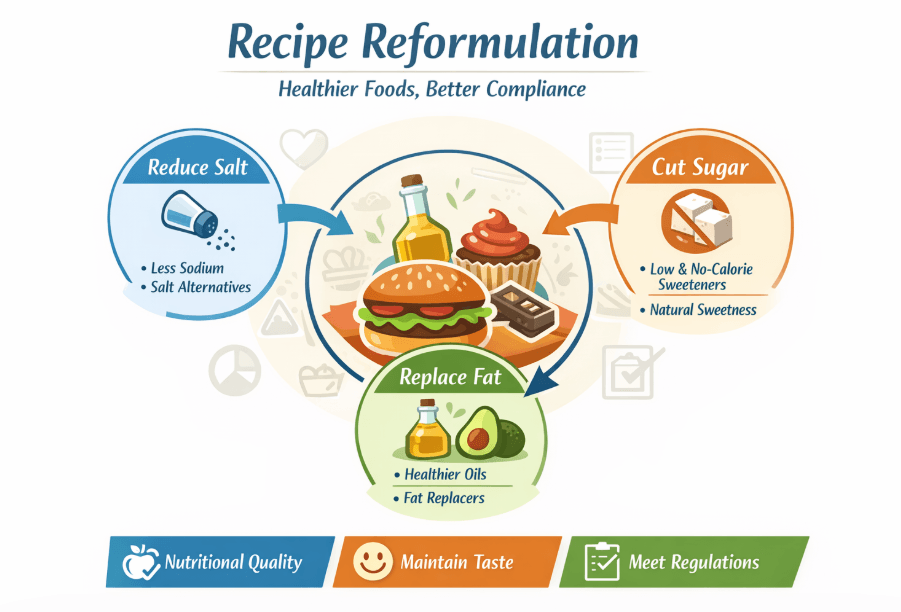
The children's menu is where the most work is likely needed. If your current menu leans on battered, fried, or processed items, reaching 50% SEHHI-compliant is a meaningful reformulation exercise — not a labelling one.
For the adult menu, the task is more selective: identify one dish per section that either already meets SEHHI thresholds or can be adapted without compromising the dish. Cooking method matters significantly here — a grilled preparation that would pass may fail if shifted to deep-frying. Getting accurate nutrition data per dish is the prerequisite to knowing where you stand.
For the Hygiene and Compliance Manager
You are the operational center of this process. Submitting recipes to ADPHC, tracking which dishes are approved, managing resubmissions when menus change, and ensuring the correct SEHHI logo appears on every menu version going forward — this is an ongoing obligation, not a one-time task.
The quality of your recipe records directly affects how smooth this process is. Inconsistent ingredient lists, missing weights, or undocumented portion sizes will slow ADPHC assessment. Structured, verified recipe data is what makes submission — and resubmission — manageable.
Training and Support from DCT and ADPHC
DCT and ADPHC offered training webinars in June 2026 to support hotel restaurants through the SEHHI certification process. Those sessions have now taken place. A recording is expected to be made available for future reference — contact DCT or ADPHC directly to request access.
For policy and process questions:
Policy interpretation: healthyliving@doh.gov.ae — Abu Dhabi Healthy Living Sector, Department of Health, 058 547 9188
SEHHI nutritional criteria: Nutrition@adphc.gov.ae — Community Health Sector, ADPHC
The Practical Challenge Is Nutritional Data, Not Intent
Most hotel operators in Abu Dhabi are not resistant to this directive. The challenge is practical.
To get a dish SEHHI-approved, you need accurate, verified nutritional values for that recipe — calculated per portion, using your actual ingredients, as prepared in your kitchen. Not approximations. Not generic database lookups. Accurate data, because ADPHC is assessing against specific numerical thresholds.
For hotels running large menus across multiple outlets — all-day dining, pool bar, specialty restaurant, children's menu, room service — doing this manually introduces significant margin for error. Dishes that are miscalculated can be rejected at assessment, or worse, approved and then fail at revalidation when a menu change triggers a resubmission.
How NutriCal Helps Hotels Get This Done
NutriCal has worked with hundreds of food businesses across the GCC on nutrition compliance — including hotel groups, central kitchens, and catering operators navigating ADPHC requirements.
For hotels preparing for October 2026, NutriCal provides:
-Accurate nutrition analysis using an approved methodology. Every recipe is calculated using a verified, ADPHC-aligned ingredient database. The output covers calories, total fat, saturated fat, added sugar, salt, and all beneficial nutrients — the exact data points SEHHI assessment requires.
-Outputs in the format ADPHC needs for SEHHI submission. You are not reformatting spreadsheets or translating between systems. The output from NutriCal is structured for submission.
-A platform that makes ongoing compliance manageable. When your menu changes — and it will — updating a recipe in NutriCal regenerates the nutrition data immediately. Resubmissions become straightforward rather than a rebuild from scratch.
-Consulting support alongside the platform. Our team works directly with F&B directors, executive chefs, and hygiene managers to review existing menus, flag dishes likely to qualify, identify quick reformulation opportunities, and structure the submission process. We have done this for hotel clients before and know where the process slows down.
The goal is to get your dishes assessed and approved before October 1 — with accurate data, in the right format, without the process sitting on a spreadsheet on someone's desk.
Frequently Asked Questions
Does this apply to our hotel if we only have a buffet restaurant? Buffets and service models that do not feature a specific written menu are outside the mandatory requirements of Circular 7/2026. Your outlet is still expected to make reasonable efforts to offer healthy options, but the minimum SEHHI count per category does not apply. If any of your outlets do operate with a written menu — including a pool bar menu or room service menu — those fall under the mandatory requirements.
We already have some healthy dishes on our menu. Do they automatically count as SEHHI-compliant? No. A dish must be formally assessed and approved by ADPHC before it can be listed as SEHHI-compliant or display the SEHHI logo. A dish that looks healthy by general standards may still not meet the specific numerical thresholds — or may contain a disqualifying ingredient such as MSG or artificial flavoring. Assessment is required before the logo can be used.
What happens if our menu changes after we receive SEHHI approval? Any changes to previously approved healthy menu items must be resubmitted to ADPHC for revalidation. The SEHHI logo cannot be applied to a modified dish until the revised version has been reassessed and approved. This is an ongoing obligation — compliance is not a one-time certification.
Can we start the ADPHC verification process now and still be considered compliant on October 1? Yes. The circular explicitly states that establishments currently engaged with ADPHC to verify healthy menu items will be considered compliant during the verification process, provided constructive progress is demonstrated. The key phrase is "constructive progress" — being actively engaged with submitted recipes and nutritional data is a defensible position. Having done nothing is not.
Government Partnership
Coming Soon















Frequently Asked Questions


NutriCal provides comprehensive nutritional analysis beyond calorie counts, encompassing allergens, meal types, and customized food labels. You can also effectively manage recipes, tailor menus, and generate insightful reports.
NutriCal is an online platform accessible from anywhere with an internet connection. Our services have a global reach, with a strong focus in the GCC region.
NutriCal collaborates with a diverse range of establishments, including food brands, suppliers, retail chains, and restaurants in the GCC.
Absolutely! NutriCal offers a complimentary trial period. Reach out to us to initiate your trial experience on our platform.
For detailed pricing information, please get in touch with our dedicated sales team. Our pricing plans are flexible and tailored to suit your specific business requirements.
We provide both monthly and annual subscription plans, granting you the choice to select the payment option that aligns best with your preferences.
NutriCal allows seamless integration of missing ingredients through credible data sources, ensuring a complete and personalized database.
NutriCal's data originates from reputable sources such as USDA and undergoes rigorous theoretical analysis, ensuring utmost precision in nutritional calculations.