




Recipe Reformulation: A Practical Guide for Healthier, Compliant Foods
Recipe Reformulation: A Practical Guide for Healthier, Compliant Foods
Recipe reformulation is more than replacing ingredients—it’s food engineering with purpose. Whether you’re building products that meet nutritional targets, satisfy consumer demands for healthier options, or comply with emerging UAE regulations, understanding the why, what, and how of reformulation is essential.
In this article we’ll unpack the science, strategies, benefits, challenges, and regulatory context of recipe reformulation, using real data and expert insights.
What Is Recipe Reformulation?
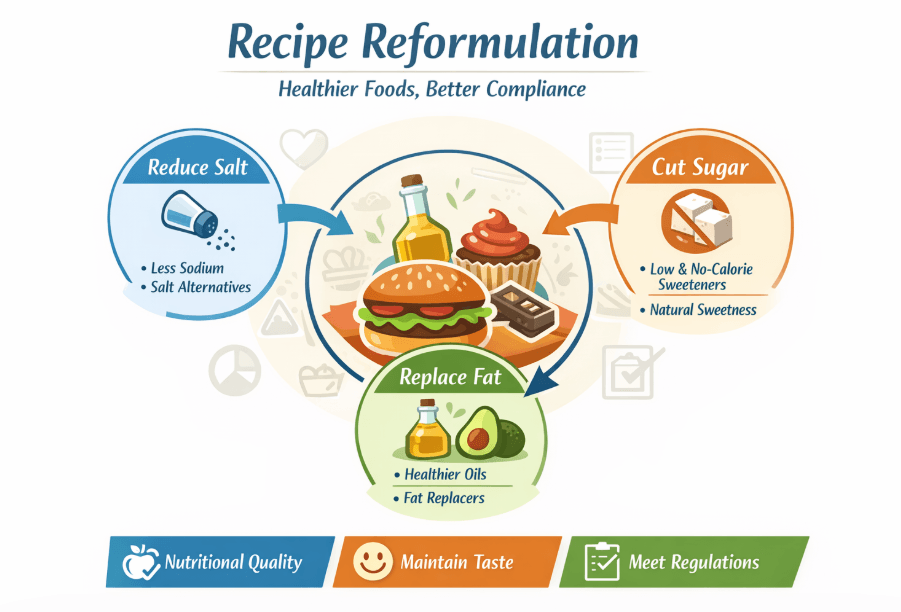
At its core, recipe reformulation means modifying existing recipes to improve their nutritional quality without sacrificing taste, texture, or consumer acceptance. This can involve reducing salt, sugar, or fat, increasing beneficial components like fiber or protein, or adjusting ingredient sources to achieve a healthier profile.
It also often aims to help food brands qualify for nutrition claims such as “low fat,” “reduced sugar,” or “high in fiber,” which are regulated and demand strict criteria. Reformulation is therefore both a science and an art—requiring understanding of ingredient functionality and the regulatory definitions behind nutrition claims.
Why Reformulation Matters
The need for reformulation isn’t hypothetical—countries worldwide are actively encouraging healthier food profiles through research, regulation, and industry collaboration.
According to the Kerry Health and Nutrition Institute, 73% of reformulated products increased nutrient intakes for consumers, and 81% showed positive consumer acceptability after changes in sodium, sugar, or fat content. Sodium reformulation alone can reduce population salt intake between 4–15% annually and lower average salt consumption by about 0.57g per day (equivalent to 221mg sodium) compared to baseline levels. (Kerry Health And Nutrition Institute)
From a public health perspective, even modest declines in excess nutrient intakes can reduce the risk of hypertension, cardiovascular disease, obesity, and diabetes, which are tied to high salt, sugar and saturated‐fat diets.
The Science Behind Reformulation
Food ingredients are multifunctional. Reducing sugar or salt doesn’t just improve numbers on a label; it changes flavor, texture, water activity, microbial stability, color, and shelf life. So reformulation strategies must account for the scientific role these ingredients play in the food matrix.
-Salt enhances flavor and acts as a preservative by lowering water activity.
-Sugar contributes sweetness, bulk, texture, and color (through Maillard browning reactions).
-Fat carries flavor and contributes creaminess and mouthfeel.
Cutting these out without alternatives often results in products that are organoleptically (sensory) inferior, which is why gradual reduction and functional substitutes are key to success.
Common Reformulation Strategies
Here’s a breakdown of classic reformulation strategies that many food developers use:
Salt Reduction
The World Health Organization (WHO) recommends less than 5g of salt per day (~2g sodium).
Reformulation strategies include:
-Incremental salt reduction—reducing by 5–10% over time to maintain taste acceptance. (foodingredientsfirst.com)
-Use of salt substitutes such as potassium chloride or yeast extracts.
-Flavor enhancers and umami-rich ingredients that maintain taste with less sodium.
-Salt reduction programs have a long track record; the UK’s Food and Drink Federation reports that through reformulation, members have reduced overall salt contributions by nearly 16% versus 2017 levels, contributing to healthier shopping baskets. (The Food & Drink Federation)
-Sugar Reduction
High sugar intake is linked to obesity and type 2 diabetes. WHO suggests keeping free sugars below 10% of total energy intake (ideally <5%). (foodingredientsfirst.com)
Reformulation techniques include:
-Non-nutritive sweeteners (e.g., stevia, erythritol) to replace or reduce added sugar.
-Bulk sweeteners and fiber to compensate for texture loss.
-Recipe tweaks to shift from sugar heavy components to fruit, spices, or flavor balances.
In the UAE and GCC, sugar reduction is gaining regulatory attention. Partnerships between industry bodies and technical centers are building expertise in sugar and calorie reduction. Mintel data shows that product launches with low or reduced sugar claims in the region are growing faster than the global average.
-Fat and Saturated Fat Replacement
The WHO recommends that saturated fats make up no more than 10% of total fat content.
Strategies involve:
-Using unsaturated fats from plant sources like olive, canola, or sunflower oils.
-Oleogels and emulsifiers to mimic the texture of saturated fats in products.
-Increasing fiber-rich components to balance energy density.
Research in bakery reformulation shows fat and sugar reformulation can substantially decrease energy density in products like biscuits and cakes. (MDPI)
Benefits: Nutrition and Public Health
Models suggest even modest reformulation can have real health impacts:
A 5–25% reduction in sugar content in sugary drinks and foods could reduce daily calorie intake by 4–21 kcal and decrease obesity prevalence. (SpringerLink)
System-wide sodium reduction is associated with gains in quality-adjusted life years (QALYs) and reductions in chronic disease risk. (SpringerLink)
In countries with national reformulation plans, significant reductions in added sugar, salt, and fat have been documented. Spain’s national reformulation initiative showed added sugar reductions up to 60% and salt reductions up to 33% across 57 food subcategories. (PubMed)
Sensory and Consumer Acceptance: The Hidden Challenge
While public health data supports reformulation, consumer acceptance remains a hurdle. A recent industry report highlights that while many manufacturers are reformulating, consumer perception often assumes taste loss with lower salt or sugar. (FoodNavigator.com)
This is why food developers rely on sensory testing—including blind taste tests and graded reductions—to ensure reformulated products remain appealing. Communicating health benefits without creating the idea of “inferior taste” is also a delicate balance.
Regulatory Environment: UAE and Beyond
Globally, regulatory bodies are tightening reformulation oversight. In the United Arab Emirates, reformulation is not just a recommendation—national strategies are setting measurable targets.
The UAE’s National Nutrition Strategy 2022–2030 aims to:
-Virtually eliminate industrial trans fats in the food supply. (Global Food Consumers Forum)
-Reduce average salt intake by 30%. (Global Food Consumers Forum)
-Expand reformulation efforts to address salt, sugar, and fat across key food categories. (Gulf News)
-Recent data shows 96.2% of UAE residents exceed daily recommended sodium levels, driving the push for maximum salt content limits in bread and packaged foods. (Gulf News)
Complementary policies like tiered sugar taxes on sweetened beverages further motivate manufacturers to reformulate to stay competitive. (Gulf News)
Reformulation is also linked to mandated nutrient claims, where defined thresholds can make or break a product’s marketing positioning.
Practical Challenges in Reformulation
While the benefits are compelling, reformulation isn’t easy:
-Technical constraints: Certain food categories have structural limits. For example, reducing fat and sugar in ice cream can compromise creaminess and texture without innovative techniques. (Cambridge University Press & Assessment)
-Cost and R&D investment: Reformulation requires lab testing, sensory panels, and ingredient sourcing changes.
-Regulatory harmonization: In the UAE and GCC, harmonizing standards across markets adds complexity.
-Consumer perception: Ensuring products are perceived as good or better after reformulation is crucial for market success.
Best Practices for Successful Reformulation
For food developers navigating recipe reformulation, here are practical takeaways:
-Start with nutrient targets and regulatory criteria before altering recipes.
-Use gradual reduction strategies (5–10% changes over time) to maintain taste.
-Replace functional ingredients thoughtfully—don’t just eliminate; substitute with alternatives that match texture and flavor needs.
-Incorporate sensory testing early, and use consumer feedback to guide iterations.
-Leverage nutrition analysis software and food science expertise to model outcomes before implementation.
Communicate clearly about reformulation—consumer transparency builds trust.
The Future of Recipe Reformulation
Reformulation is moving beyond single nutrient reduction to a holistic approach—considering energy density, micronutrient enrichment, clean labels, and food heritage alongside health goals.
As regulations tighten and consumers increasingly demand healthier foods, recipe reformulation will become a core competency for food professionals. It’s not just about compliance; it’s a competitive advantage in an industry where health, taste, and transparency are reshaping expectations.
Final thought: Reformulation isn’t about stripping food of flavor; it’s about redesigning foods so they deliver nutrition without compromise. When done right, reformulated products can taste as good—or better—while aligning with public health goals and regulatory frameworks.

Government Partnership
Coming Soon
















Frequently Asked Questions


NutriCal provides comprehensive nutritional analysis beyond calorie counts, encompassing allergens, meal types, and customized food labels. You can also effectively manage recipes, tailor menus, and generate insightful reports.
NutriCal is an online platform accessible from anywhere with an internet connection. Our services have a global reach, with a strong focus in the GCC region.
NutriCal collaborates with a diverse range of establishments, including food brands, suppliers, retail chains, and restaurants in the GCC.
Absolutely! NutriCal offers a complimentary trial period. Reach out to us to initiate your trial experience on our platform.
For detailed pricing information, please get in touch with our dedicated sales team. Our pricing plans are flexible and tailored to suit your specific business requirements.
We provide both monthly and annual subscription plans, granting you the choice to select the payment option that aligns best with your preferences.
NutriCal allows seamless integration of missing ingredients through credible data sources, ensuring a complete and personalized database.
NutriCal's data originates from reputable sources such as USDA and undergoes rigorous theoretical analysis, ensuring utmost precision in nutritional calculations.