



Abu Dhabi School Nutrition & Healthy Eating Guidelines: A Complete Compliance Guide for Schools and Caterers
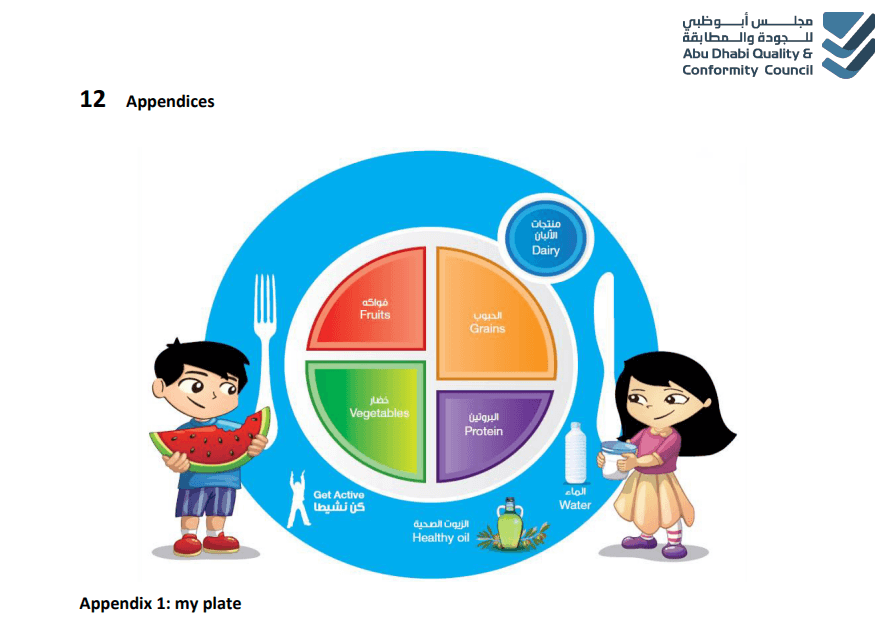
Published: 28/01/2026 Source: https://jawdah.qcc.abudhabi.ae/en/Registration/QCCServices/Services/STD/ADG/ADG-002-2025-En.pdf TL;DR – Quick Guide to Key Requirements - Scope: Applies to all public, private, and charter schools in Abu Dhabi, covering cafeterias, vending machines, school events, and home-packed lunches. - Nutrition Standards: Meals must follow the Healthy Plate model and meet age-specific calorie and nutrient targets. Foods are classified as Green (allowed) or Red (prohibited). - SEHHI Program: Official certification for compliant meals; vendors must complete SEHHI training. - Menu Approval: All weekly menus require pre-approval from ADPHC before serving. - Snack & Beverage Rules: Strict limits on calories, sugar, fat, and sodium; water must be freely available. - Allergen Management: Schools must maintain allergy registers; vendors must prevent cross-contamination. - Lunchbox Compliance: Schools may replace non-compliant items with approved alternatives. - Oversight: QCC is the custodian of the guidelines; compliance is monitored through audits and certification. - Digital Tools: Platforms like NutriCal automate nutrition analysis, recipe scaling, and label generation to ensure accurate, scalable compliance. Why School Nutrition Standards Matter in Abu Dhabi School food plays a critical role in shaping children’s long-term health, eating habits, and academic performance. In Abu Dhabi, students consume a significant proportion of their daily calories on campus, making schools one of the most influential food environments in a child’s life. To address rising concerns around childhood obesity, poor diet quality, food allergies, and inconsistent nutrition practices, Abu Dhabi introduced the Unified School Nutrition & Food Safety Guidelines. These guidelines establish clear requirements for school meals, snacks, beverages, portion sizes, allergen management, and nutrition labeling across all schools in the Emirate. What Are the Abu Dhabi School Nutrition & Food Safety Guidelines? The Abu Dhabi School Nutrition & Healthy Eating Guidelines provide a unified regulatory framework that governs all food offered within school premises. This includes food served through cafeterias, vending machines, school events, and home-packed lunches. The guidelines are designed to ensure that food offered to students is: - Nutritionally balanced and age-appropriate - Safe and hygienically prepared - Clearly labeled with accurate nutrition and allergen information - Consistent across public, private, and charter schools They apply to early years, primary, and secondary education settings and are enforced as part of broader public health and food safety regulations. The Purpose Behind Unified School Nutrition Standards Before the introduction of unified guidelines, nutrition practices varied widely between schools. Many students had regular access to high-sugar snacks, highly processed foods, and products with unclear ingredient and allergen information. The unified approach ensures consistency, equity, and accountability by setting minimum nutrition requirements, defining portion sizes, restricting unsuitable foods, and strengthening allergen control. This protects student health while supporting schools and food providers with clear compliance expectations. Key Objectives of the Abu Dhabi School Nutrition Guidelines The guidelines aim to: - Improve diet quality and nutrient intake among children - Reduce excessive sugar, salt, and unhealthy fat consumption - Prevent food-related allergic reactions and foodborne illness - Promote nutrition education and food literacy - Create a supportive food environment where healthy choices are the default Scope of Application Across Schools The guidelines apply to: - Public, private, and charter schools - Early years, primary, and secondary students They cover all points of food provision, including: - School cafeterias - Vending machines - School events and celebrations - Home-packed lunchboxes This ensures a controlled and consistent school food environment across Abu Dhabi. Nutrition Requirements for School Meals School meals must provide balanced energy and nutrients appropriate for a child’s age and developmental stage. Main meals should contribute approximately 30–35% of daily energy requirements and include a balance of carbohydrates, protein, and fat. Meals should prioritize: - Whole grains - Lean protein sources - Fruits and vegetables - Dairy or suitable alternatives Cultural and religious dietary requirements must also be respected. Healthy Plate Model for Schools The Healthy Plate model supports portion control and balanced nutrition: - Half the plate from fruits and vegetables - One quarter from lean protein - One quarter from whole grains - One serving of dairy Food Classification in Schools Foods offered in schools are categorized to guide healthier choices. Green foods (always allowed) include fresh fruits and vegetables, whole grains, lean proteins, milk, and minimally processed foods. Red foods (not recommended or prohibited) include foods high in added sugar, saturated fat, sodium, or heavily processed items. SEHHI Certification: Compliant meals and snacks may be certified under the SEHHI (Healthy School Initiative) program and carry the SEHHI logo, indicating they meet strict nutritional specifications per age group (see Table 6 of the guidelines). This system helps schools and caterers design menus that meet nutrition standards while limiting exposure to low-nutrient foods. Sugar, Calories, and Menu Labeling Requirements Sugar Limits For packaged snacks, sugar may contribute up to 35% of total carbohydrates by weight. Bakery Item Portion Sizes Portion limits vary by product type: - Biscuits, pancakes, and waffles: up to 40 g per serving - Pies and quiches: up to 125 g per serving Note: The SEHHI logo cannot be added to bakery goods. Calorie Display and Nutrition Information Calories must be clearly displayed at points of choice, and nutrition information must be available upon request. Labels must accurately reflect portion sizes and nutrient content. Digital nutrition analysis and labeling systems like NutriCal enable schools and caterers to automatically generate compliant Nutrition Facts tables, calculate precise calorie and nutrient values per serving, and adjust recipes to meet guidelines—ensuring accuracy and saving significant time in menu planning and compliance reporting. Nutritional Requirements for Snacks Snack foods offered in schools must meet defined energy and nutrient limits. - Packaged snacks: up to 200 kcal per serving - Mixed or combination snacks: up to 350 kcal per serving Additional requirements include: - Total fat ≤35% of calories - Saturated fat <10% of calories - Trans fat ≤1 g - Sugar ≤35% of total carbohydrates by weight Certain foods, such as fresh fruits, vegetables, unsweetened dried fruits, seeds, low-fat cheese, and lean seafood, are exempt from some limits. Healthy Vending Machines in Schools Vending machines must support healthy eating by offering approved foods that meet portion, calorie, sugar, fat, and sodium criteria. Preference is given to whole foods and minimally processed options, with dairy products offered in plain or unsweetened forms. Placement and product selection should encourage healthier choices among students. Hydration and Approved Beverages Students must have free access to safe drinking water throughout the school day. Approved beverages include low-fat milk and limited portions of 100% fruit juice. Isotonic drinks are permitted only under specific conditions, such as for middle or high school students engaged in prolonged, supervised physical activity lasting more than 60–90 minutes. Outside these conditions, water remains the primary hydration source. Food Safety and Allergen Management Strict food safety and allergen control measures are mandatory in all schools. This includes hygienic food preparation, prevention of cross-contamination, clear ingredient disclosure, and staff training. Specific Required Actions: - Schools must maintain a confidential student allergy register and ensure staff are trained in emergency response. - Vendors must provide full ingredient lists and use separate utensils and prep areas for allergen-free meals. Accurate allergen identification is essential to protect students with food allergies and intolerances. Home-Packed Lunchbox Guidelines Home-packed lunches are encouraged to align with school nutrition standards. A balanced lunchbox should include whole grains, lean protein, fruits or vegetables, and water or milk. Sugary snacks, processed meats, and high-salt packaged foods should be limited. School Authority: Schools are empowered to confiscate non-compliant items and provide compliant alternatives when necessary. Monitoring should be visual, respectful, and non-shaming, with repeated non-compliance leading to supportive engagement with parents. The focus is on education and positive reinforcement alongside clear policy alignment. What Happens If You Don’t Comply? Non-compliance carries real operational and regulatory consequences. Schools and vendors risk: - Menu rejection by ADPHC, delaying meal service - Loss of SEHHI certification and logo usage rights - Corrective actions from oversight bodies (ADEK, ADPHC, ADAFSA) - Parental concern and loss of trust in school food safety - Increased liability in cases of allergen exposure or foodborne illness Proactive compliance isn’t just about avoiding penalties—it’s about ensuring student safety, maintaining institutional reputation, and contributing to Abu Dhabi’s public health vision. Monitoring, Evaluation, and Compliance Compliance is monitored through: - Vendor registration and mandatory SEHHI training - Menu pre-approval: Weekly menus and product lists must be submitted to ADPHC for review before service. - Conformity certificates for packaged foods - Audits and verification of nutrition and allergen information Official Custodian: The Abu Dhabi Quality and Conformity Council (QCC) serves as the single custodian of the guidelines. All feedback and implementation queries should be directed to QCC. Digital platforms like NutriCal support schools and food providers in maintaining consistent compliance at scale by managing nutrition analysis, allergen tracking, menu planning, recipe reformulation, and compliant label generation. This reduces manual errors, streamlines the approval process, and ensures every meal served meets Abu Dhabi’s stringent standards. Supporting Schools Through Digital Nutrition Tools Meeting Abu Dhabi School Nutrition & Healthy Eating Guidelines requires accuracy, consistency, and transparency. Nutrition analysis and food labeling software like NutriCal help schools and caterers adapt quickly, ensure regulatory compliance, and provide safe, nutritious meals for students every day—turning complex guidelines into actionable, scalable processes. For the complete official text, detailed tables, and annexes, always refer to the original Abu Dhabi Unified School Nutrition & Food Safety Guideline document. This guide is a summary for implementation support.


Government Partnership
Coming Soon














Frequently Asked Questions


NutriCal provides comprehensive nutritional analysis beyond calorie counts, encompassing allergens, meal types, and customized food labels. You can also effectively manage recipes, tailor menus, and generate insightful reports.
NutriCal is an online platform accessible from anywhere with an internet connection. Our services have a global reach, with a strong focus in the GCC region.
NutriCal collaborates with a diverse range of establishments, including food brands, suppliers, retail chains, and restaurants in the GCC.
Absolutely! NutriCal offers a complimentary trial period. Reach out to us to initiate your trial experience on our platform.
For detailed pricing information, please get in touch with our dedicated sales team. Our pricing plans are flexible and tailored to suit your specific business requirements.
We provide both monthly and annual subscription plans, granting you the choice to select the payment option that aligns best with your preferences.
NutriCal allows seamless integration of missing ingredients through credible data sources, ensuring a complete and personalized database.
NutriCal's data originates from reputable sources such as USDA and undergoes rigorous theoretical analysis, ensuring utmost precision in nutritional calculations.