



Nutri-Mark in Abu Dhabi: What Food Manufacturers, Distributors, and Retailers Need to Know Before 2026
The New Nutrition Labeling System in Abu Dhabi
The packaged food industry in Abu Dhabi is entering a new era of transparency and health-focused labeling. The Abu Dhabi Quality and Conformity Council (QCC), a leading body of regulators and industry representatives, has announced the mandatory implementation of the Nutri-Mark —a front-of-pack label designed to clearly communicate a product’s nutritional value. With a new deadline set for early 2026, businesses have some time to prepare—but the clock is ticking.
Whether you manufacture, distribute, or sell packaged food and beverage items in Abu Dhabi—including through retail outlets such as supermarkets and hypermarkets—this change will impact how you label and position your products.
What is the Nutri-Mark?
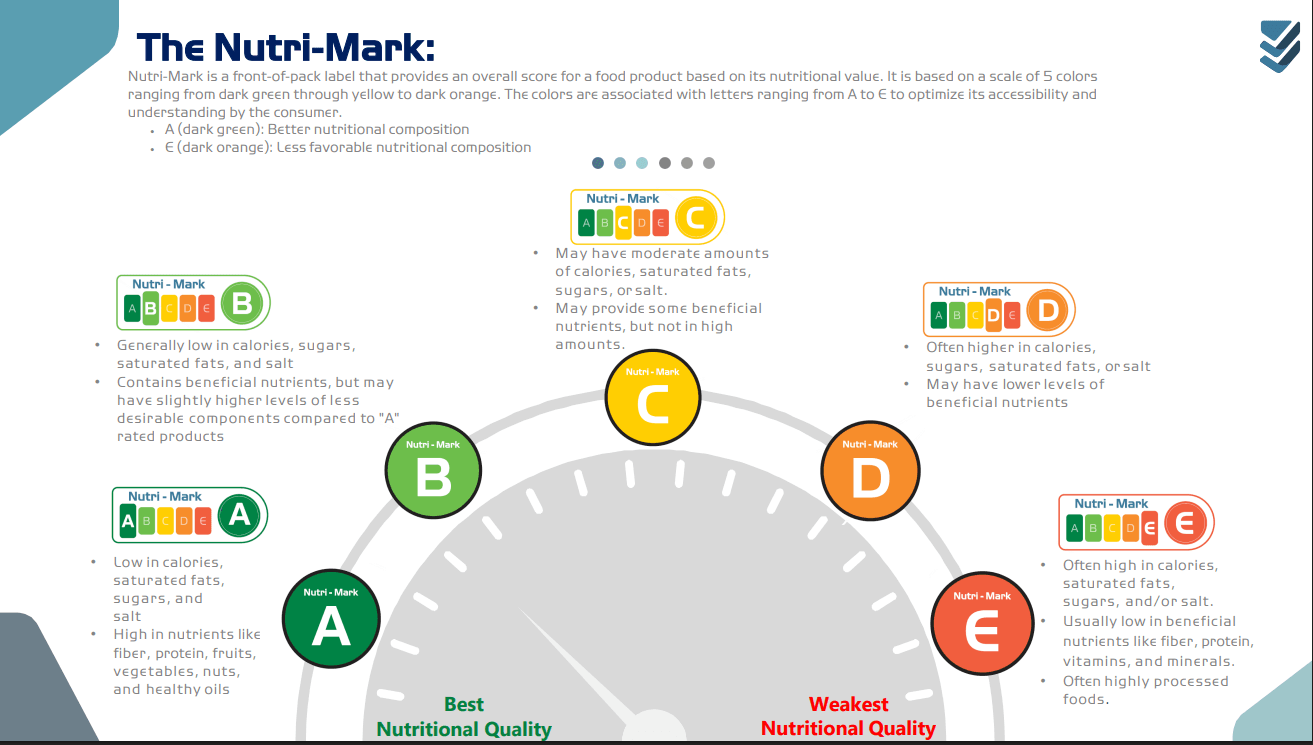
The Nutri-Mark is a color-coded, letter-graded front-of-pack label that offers consumers an at-a-glance view of a food or drink item’s nutritional quality.
It uses a five-level scale:
A (Dark Green): Best nutritional composition
B (Light Green)
C (Yellow)
D (Orange)
E (Dark Orange): Least favorable nutritional composition
Each score is based on a combination of calories, saturated fats, sugars, salt, fiber, protein, and positive ingredients like fruits, vegetables, nuts, and healthy oils. It’s a simplified but effective tool to help consumers make informed choices—especially when detailed nutrition facts labels are overlooked or misunderstood.
Nutri-Mark Vs Nutri-Score
Nutri-Mark may remind some of the Nutri-Score system used across Europe. Both use a color-coded, letter-based front-of-pack label—from A (dark green) for healthier products to E (dark orange) for less healthy ones. The goal is similar: make it easier for consumers to make informed food choices at a glance.
However, there are key differences. Nutri-Score is voluntary in most countries and based on a general European formula. Nutri-Mark, on the other hand, is becoming mandatory in Abu Dhabi and designed to reflect local health priorities, such as the region’s high rates of obesity and chronic disease. Importantly, Nutri-Mark requires official certification from the Abu Dhabi Quality and Conformity Council (QCC), which ensures a standardized and regulated approach. For food businesses operating in Abu Dhabi, this means that Nutri-Mark is not just a helpful tool—it’s a compliance requirement.
The Nutri-Mark grading system is based on the 2023 revision of the Nutri-Score front-of-pack nutrition labeling system, which was first introduced in France in 2017. Several European countries including Belgium, Germany, Spain, Switzerland, the Netherlands, and Luxembourg have adopted or recommended Nutri-Score. While Nutri-Mark reflects international experience with front-of-pack nutrition labeling, it has been adapted to the local regulatory and market context of the UAE through the Abu Dhabi Guideline for the Use of the Nutrition Mark (ADG-044-2024).
Why Is Abu Dhabi Introducing Nutri-Mark?
Obesity and chronic disease rates are rising across the UAE, and Abu Dhabi is no exception. According to local data:
61% of Abu Dhabi’s adults are overweight or obese—14% higher than the OECD average.
37% of children in Abu Dhabi are overweight or obese—19% above the OECD average.
High body mass index (BMI) contributes to up to 40% of deaths from non-communicable diseases like diabetes and heart disease.
Obesity-related healthcare costs reached AED 1.7 billion in 2023, with an estimated AED 20 billion in socio-economic impact in 2024.
The Nutri-Mark is part of a larger strategy to encourage healthier eating habits by helping people understand what they’re eating—starting with clear and visible front-of-pack labels.
Nutri-Mark has been developed to support Abu Dhabi Government policies aimed at:
-Improving population nutrition and dietary quality
-Reducing diet-related health risks
-Supporting evidence-based regulatory interventions
-Encouraging industry innovation and reformulation
Six entities have formed a technical team to work on this initiative: Abu Dhabi Public Health Centre (ADPHC), Abu Dhabi Quality and Conformity Council (QCC), Abu Dhabi Agriculture and Food Safety Authority (ADAFSA), Department of Economic Development, Department of Health, and Abu Dhabi Early Childhood Authority.
What Does This Mean for Food Businesses?
If you manufacture, distribute, or sell packaged food and beverages in Abu Dhabi, the Nutri-Mark system will apply to you. This includes:
-Food producers and manufacturers
-Importers
-Suppliers
-Distributors and wholesalers
-Supermarkets, hypermarkets, and food retailers
-Brand owners
The goal is to help businesses:
-Provide clear and accessible nutrition information
-Make it easier for consumers to choose healthier options
-Stay aligned with Abu Dhabi’s vision of promoting a culture of quality, innovation, and consumer safety
How Does the Nutri-Mark Work?
The Nutri-Mark grade is calculated using a standardized nutrient profiling model described in the Abu Dhabi Guideline for the Use of the Nutrition Mark (ADG-044-2024).
The calculation considers both nutrients to limit and nutrients to encourage.
Nutrients to limit include:
-Energy (Calories)
-Total Sugars
-Saturated Fat
-Sodium
Nutrients and ingredients to encourage include:
-Dietary Fiber
-Protein
-Fruits and Vegetables
-Certain beneficial ingredients
The final score determines the Nutri-Mark grade displayed on the packaging.
To ensure consistency and regulatory alignment, the Abu Dhabi Quality and Conformity Council (QCC) provides an official Nutri-Mark Calculation Tool that food businesses must use when determining product scores.
Before using the Nutri-Mark on a product, operators must:
-Calculate the Nutri-Mark score using the official calculation tool.
-Submit the required information through the QCC online registration process.
-Apply the Nutri-Mark label according to the official graphic usage guidelines.
Once the registration process is completed, operators receive the official graphical files for use on product packaging.
Food business operators are responsible for:
-Ensuring the accuracy of nutrition data
-Correct application of the calculation methodology
-Proper use of the Nutri-Mark label and graphics
-Submission of required information to QCC for registration and oversight
What Products Are Included in the First Phase?
In the first phase of implementation, Nutri-Mark will apply to:
1) General Food
2) Cheese
3) Red Meat
4) Beverages
5) Animal/Vegetable Fats, Nuts and Seeds
These are commonly consumed food categories that can have a significant impact on public health. Businesses dealing in these products should begin preparing nutrition facts labels and submitting applications to QCC for assessment.
Examples of Nutri-Mark Scores
Let’s take a look at how products might score:
A (Dark Green): Low in calories, sugars, saturated fats, and salt. Rich in fiber, protein, or healthy oils. (e.g., a low-fat hummus with added chickpeas and olive oil)
C (Yellow): Moderate in less desirable nutrients, may offer some beneficial ones. (e.g., fruit yogurt with some added sugar)
E (Dark Orange): High in sugars, saturated fats, salt; usually highly processed and low in beneficial nutrients. (e.g., sugar-loaded breakfast cereal or fried snacks)
This level of transparency goes far beyond traditional nutrition facts labels by giving consumers a quick, visual summary of what they’re consuming.
How the Nutri-Mark Can Help Drive Better Choices
Nutrition education is often limited. Many people struggle to interpret nutrition facts labels or are unsure how much sugar, salt, or saturated fat they’re consuming daily. Nutri-Mark takes that confusion out of the equation.
-Visual Simplicity: A single glance at the color and grade tells you if a product is a better or worse choice.
-Health Promotion: Consumers may opt for a B-rated juice instead of a D-rated one.
-Industry Motivation: Brands are encouraged to reformulate products for a better score.
Ultimately, this system creates a win-win: consumers get clearer information, and companies are pushed toward healthier innovation.
How NutriCal Helps You Stay Compliant
Meeting the requirements of Nutri-Mark starts with having accurate nutrition facts labels—and this is where NutriCal makes a big difference.
NutriCal is a smart software platform that helps you:
-Calculate nutrition facts labels accurately using your recipes and ingredients
-Instantly assess sugar, fat, salt, calorie, and fiber content
-See how your product would score on Nutri-Mark
-Tweak and reformulate recipes to improve your score
-Get the accurate nutrition facts you need to fill out the QCC submission sheet
Whether you’re a large-scale manufacturer, distributor, or food retailer, NutriCal takes the guesswork out of compliance.
Reformulating for a Better Nutri-Mark Score
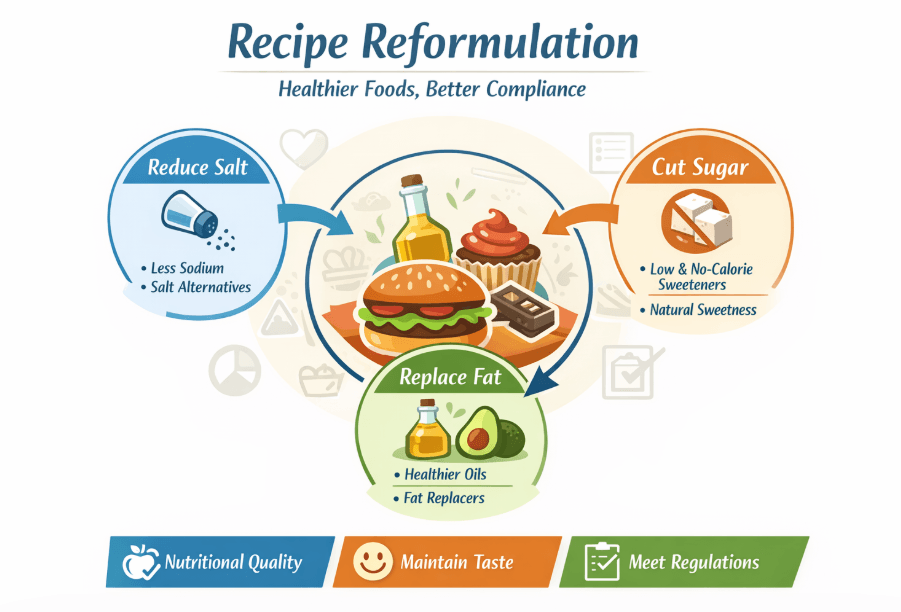
To achieve a higher Nutri-Mark grade, you might need to reformulate products to lower the sugar, salt, or saturated fat content while boosting fiber or adding healthy ingredients like legumes or whole grains. NutriCal makes this process easier by showing you the impact of every ingredient swap in real time.
A Shared Responsibility: Government and Industry Working Together
Addressing overweight and obesity isn’t something that can be solved by one group alone—it requires action from both regulators and the food industry.
Regulatory Authorities
Government bodies play a vital role in shaping a healthier food environment. Their responsibilities include:
-Setting nutritional limits for sugar-sweetened beverages and energy-dense foods.
-Promoting healthier diets by encouraging reduced intake of fats and sugars, and increasing consumption of fruits, vegetables, legumes, whole grains, and nuts.
-Launching initiatives that make healthier food choices more available, accessible, and appealing to the public.
Food Industry
Manufacturers, distributors, and retailers also have a key role to play. They can:
-Reformulate products to reduce fat, sugar, and salt content.
-Ensure nutritious, healthier options are available and affordable for all consumers.
-Limit the marketing of foods high in sugar, salt, and fat—especially those aimed at children.
Together, these actions contribute to a more supportive food environment—one that empowers people to make better, healthier choices every day.
Important Documents and Resources
-Abu Dhabi Guideline for the Nutri-Mark (ADG-044-2024)
-Conditions for Use of the Nutri-Mark (QCC-CoU01-01)
-Nutri-Mark Questions and Answers
-Official Nutri-Mark Calculation Tool
-Nutri-Mark Label and Graphics Guidelines
These documents provide detailed guidance on methodology, registration requirements, label usage, and compliance obligations.
For questions related to Nutri-Mark implementation, calculation, or registration, operators should refer to the official guidance documents or contact QCC directly.
Final Thoughts
Abu Dhabi’s Nutri-Mark regulation represents a major shift in how food quality is communicated. With the deadline extended to early 2026, now is the time to prepare:
✅ Understand the Nutri-Mark grading system
✅ Ensure your products have accurate nutrition facts labels
✅ Use NutriCal to simplify compliance and improve product scores
✅ Contribute to a healthier food culture in Abu Dhabi
As you prepare for Nutri-Mark implementation, having the right tools can make a big difference. NutriCal is designed to support this process—feel free to get in touch if you'd like to learn more or have any questions.

Government Partnership
Coming Soon













Frequently Asked Questions


NutriCal provides comprehensive nutritional analysis beyond calorie counts, encompassing allergens, meal types, and customized food labels. You can also effectively manage recipes, tailor menus, and generate insightful reports.
NutriCal is an online platform accessible from anywhere with an internet connection. Our services have a global reach, with a strong focus in the GCC region.
NutriCal collaborates with a diverse range of establishments, including food brands, suppliers, retail chains, and restaurants in the GCC.
Absolutely! NutriCal offers a complimentary trial period. Reach out to us to initiate your trial experience on our platform.
For detailed pricing information, please get in touch with our dedicated sales team. Our pricing plans are flexible and tailored to suit your specific business requirements.
We provide both monthly and annual subscription plans, granting you the choice to select the payment option that aligns best with your preferences.
NutriCal allows seamless integration of missing ingredients through credible data sources, ensuring a complete and personalized database.
NutriCal's data originates from reputable sources such as USDA and undergoes rigorous theoretical analysis, ensuring utmost precision in nutritional calculations.